Rituals of the Old is an ongoing indie game project created by Finnish game studio Star and Serpent. It is a “hard reality” multiplayer voxel sandbox RPG that aims to be as difficult and immersive as real life. As a game designer, I was charged with developing the game’s lore and magic (along with associated quests and mechanics).
The game took a different approach to magic than most other games: instead of being an intuitive, easy-to-learn skill tree, the idea was to adapt complex, real-life ritual magic. Emphasis was placed on the idea that the experience of becoming a mage was just as important as the magic itself, and that the journey should be characterized by discovery, experimentation, and encounters with the unknown.
SAMPLES
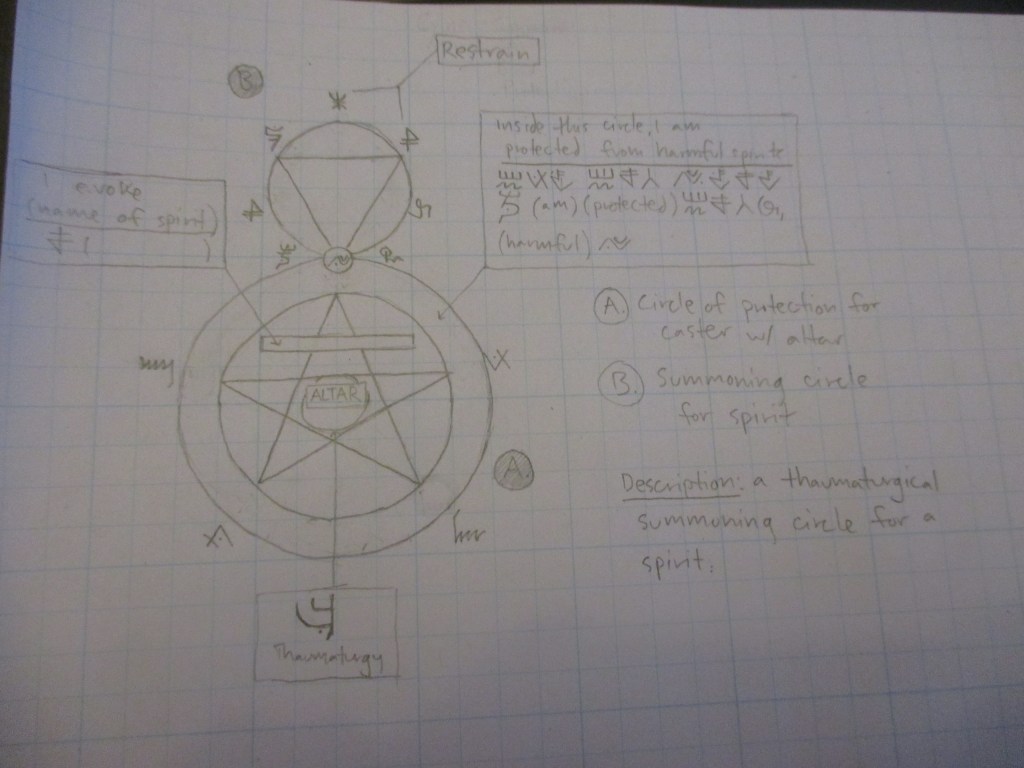
OVERVIEW
While working on Rituals of the Old, I was in charge of fleshing out the magic, history, and lore for the game, as well as designing quests. The game’s magic was based directly on ritual magic (as interpreted by the real-life cult of the Golden Dawn), and one of my chief tasks was adapting that magic system to the game.
You can see a sample of my work below.
You can see my full portfolio of work for the game here.
CHALLENGE #1: Adapt Real-Life Ritual Magic for the Game
CHALLENGE: Adapt real-life ritual magic in a way that was immersive, modular, and skill-based.
SOLUTION: Create two special interfaces where the player draws the ritual circle by hand, then fills in specific symbols.
SUMMARY:
Rituals of the Old aimed to make ritual circles the heart of magic, but we weren’t sure how to implement them in a way that 1) fit the spirit of the game, 2) was flexible enough to fit all types of spells, and 3) required a certain level of skill to complete. To meet these three requirements, I created the following procedure.
After using an in-game meditation period to focus on a specific spell and selecting an appropriately large, empty area, a player enters the Stage 1 Ritual Circle screen. This screen has a black circle and an invisible template for a shape inside of it, such as a triangle or pentagram, depending on the spell the player meditated on. Similar to the EA game Harry Potter and the Sorcerer’s Stone, the player would attempt trace the correct shape within the invisible boundaries of the template by clicking and holding their mouse to draw.
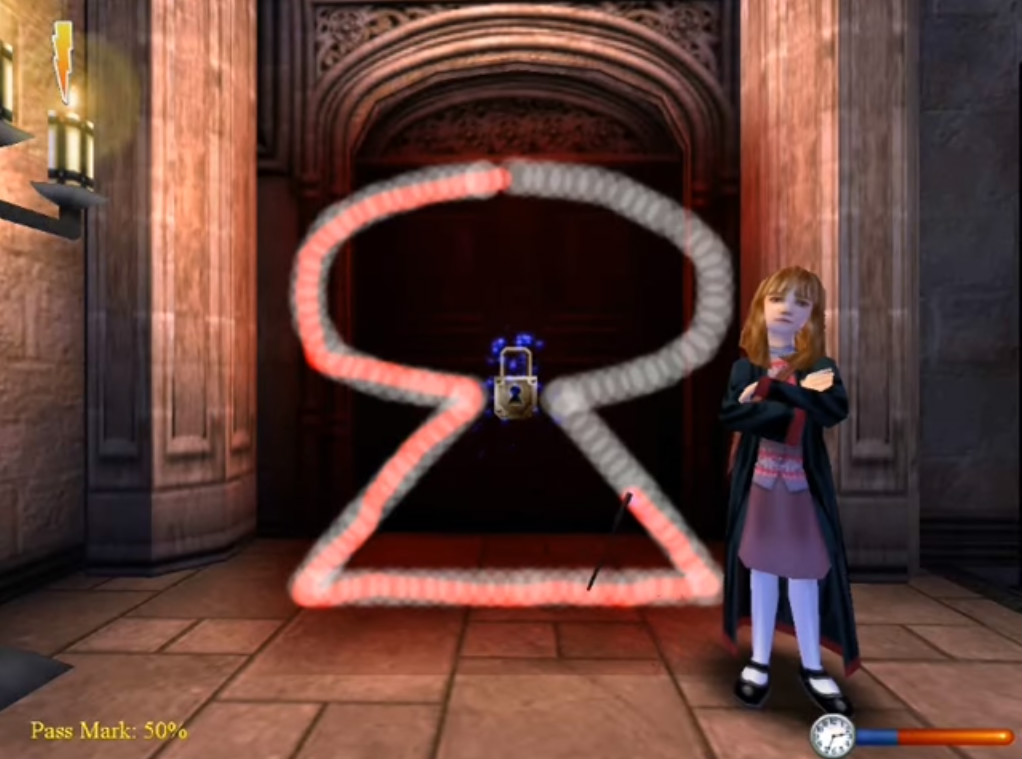
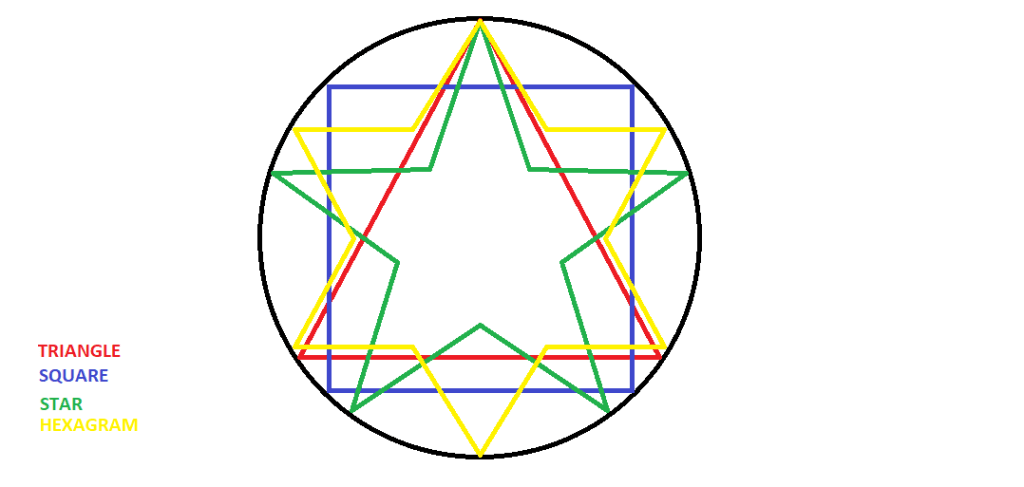
If 80% of the player’s marks are within the lines of the template, the ritual circle is successfully drawn. Having higher magical stats makes the success threshold lower, making it easier to trace the symbol in one attempt.
After tracing the central symbol of the ritual, the player moves on to the Stage 2 Ritual Circle screen. On this screen, the player can choose additional features for this specific ritual, including spirit names, outer symbols, and inscriptions.
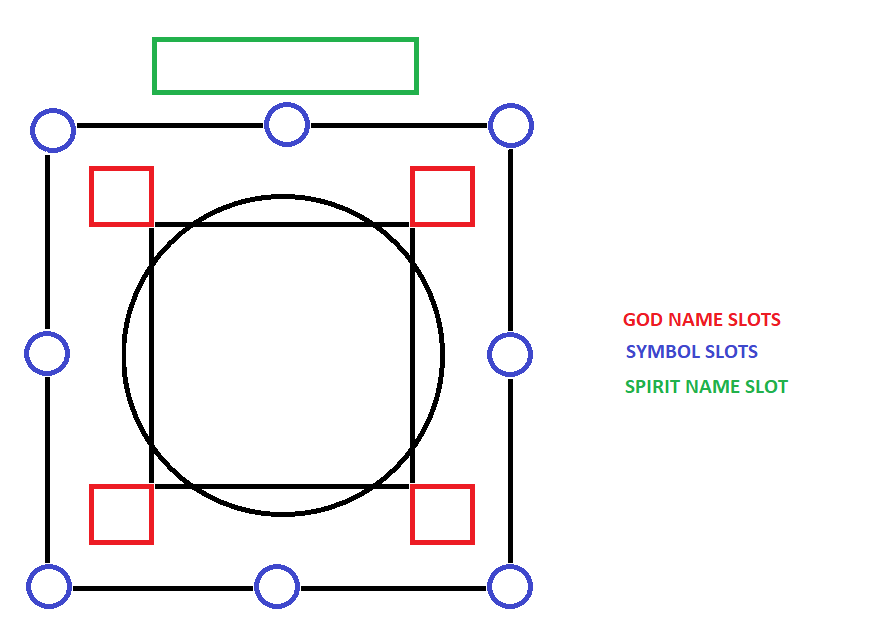
These slots are modular, and some may be optional:
- There are eight circular slots around the circle, forming a square. Some of these may be filled with pentagrams, crosses, or the points of the compass.
- There are four rectangular slots meant to hold the in-game equivalent of the Tetragramaton.
- There is one slot above the main circle where a spirit’s individual name may be written.
In the case of a summoning ritual, for example, a pentagonal summoning circle would be required, along with the “spirit name” slot. For a divination ritual, using the eight outer slots might be required. Each of these slots would require the player to draw the correct symbol or type in the correct name. Upon entering all the correct inputs on the in-game interface, the player completes the diagram and is ready to enact the ritual.
 Chris Mahon